Blog

Mary Woodward at the Festivals

Unheard Voices, Unbroken Spirits, The Fringe, Review

*** (3 stars)

“Compassionate”

By an amazing coincidence, or a whacking great piece of serendipity, this show dovetails neatly with the exhibitions at the Parliament that I went to last week.  One Hundred Voices leads you on a trail through the ridiculously tortuous system that currently fails to care for the children that are in care in Scotland, during which you hear voiced many of the experiences of children and young people themselves.

Unheard voices, unbroken spirits takes these voices and brings them to life.  Both exhibition and show are rightly uncomfortable – it’s outrageous that, in a country which has promised that no child shall grow up feeling unsafe or unloved, these very children are caught up in a system in which they have no control over their lives and where they feel ignored, overlooked and unheard.

The action centres around Daisy, who has long experience of being in the care system, of loving and supporting her fellows, watching them all move on, while herself feeling unsupported and rapidly losing any hope of living up to the promise she showed as a child.  Around her are Sienna, Rachael, Lara, Ethan, and her boyfriend Matthew.  The adults with whom she interacts are mainly more interested in the system, in maintaining discipline, and punishing unruly behaviour than in attempting to work out quite why Daisy is failing to live up to the promise she showed in previous years.  There were points in the action where I could quite cheerfully have given them a piece of my mind – could they not see that all the “bad behaviour” stemmed from deep unhappiness and an inability to cope with all the crap life was flinging at Daisy and her friends?

A tragic incident leaves all Daisy’s friends completely at a loss – but there is hope.  They manage to overcome their differences and, in thinking about what Daisy might have wished to see, work towards creating a safe space where young people in care can know they are heard and have a place in which they can safely just be themselves – Daisy’s Chain.

Talia Maysey directed and produced this piece, as well as composing the music.  Massive credit to Lauren Boyle who, in writing the story of Daisy, gave a voice to herself and all the other children and young people who are care-experienced.  As she says, nobody understands the care system like the kids in care do.  Writing this show, it’s not just helped me, it has helped so many others to share their stories as well. 

It’s hard to talk about your own personal stories, especially when there’s not much knowledge surrounding it.  For so long, I felt like my voice didn’t matter.  This musical is helping me realise, there are people who do want to listen, do want to help make a change.

There’s a lot of heartfelt emotion in this piece, with songs like When the snow still felt like magic; Still waiting for a miracle; Giving up on me – all heartbreaking to listen to.  The show is double cast, and I can only imagine the effort that has gone into helping all the young cast navigate the challenges of performing on stage, let alone for their first time at the Fringe.  Not everything is perfect, but it’s all deeply felt.  Solo performing is scary, and it’s obvious that having company on stage makes things easier, but I’m well impressed with the way everyone kept going no matter what – and with no musicians on stage or conductor to help them along the way.

I hope that people who come to this show will be more compassionate towards children and young people who are in care and, if they can, do something to make their lives better.  It’s easy to criticise: it’s much harder to care, and to want to make a difference.  Let’s let Lauren/ Daisy have the final word.

“A world where every kid feels seen” is the heart of the musical and by you coming today, it has helped us feel seen.  Thank you.

Unheard Voices, Unbroken Spirits, The Fringe, Gilded Balloon Patter House, Venue 24 runs until 31st August for more information go to: Unheard Voices, Unbroken Spirits | Edinburgh Festival Fringe
Mary Woodward at the Festivals

Maxim Emelyanychev and SCO Wind Soloists, Edinburgh International Festival, Review

***** (5 stars)

“Brilliant But Bonkers.”

A comment unashamedly stolen from a fellow concertgoer.  They were referring to one of the pieces this morning, but thiscould almost be the title for the whole concert.

Utterly brilliant, bursting with life and joie de vivre, and a showcase for the outstandingly talented wind soloists whom one usually sees within the band, standing out during their solos passages and then blending seamlessly into the orchestral ensemble.

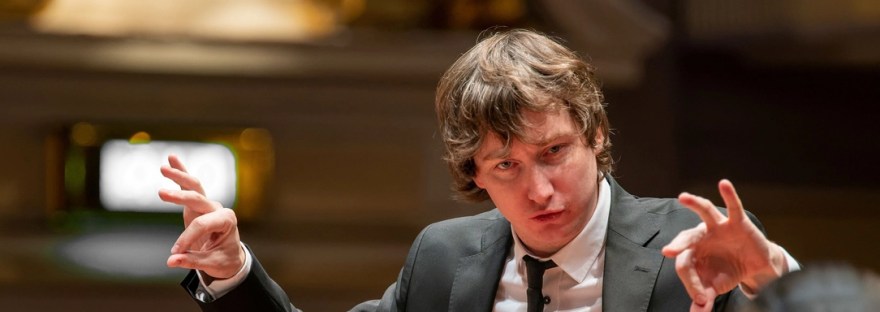
In the first half of the programme, flautist André Cebriàn, oboeist Clara Schweinberger and clarinettist Maximiliano Martin were each accompanied by the SCO principal conductor, Maxim Emelyanychev, in the sonata Francis Poulenc wrote for their instrument.  The second half brought in bassoon player Cerys Ambrose-Evans and horn player Kenneth Henderson and gave Maxim Emelyanychev the opportunity to display his superb piano technique [while also allowing the five instrumentalists a brief rest].

I’ve known the Poulenc flute sonata for many years – my then partner was playing the piano part as one of the pieces in their degree assessment.  It was then, and is now, a delight.  The first movement cheeky, playful, sparkling with sunlight and languorously lounging; the second more wistful and yearning, with sudden outbursts of passion; and the third a mad helter-skelter dash for the finishing line where calm interludes couldn’t silence the irrepressible quirkiness which had the audience roaring their applause almost before the final note had died away.

The oboe sonata is so very different – and here we could begin to appreciate the mastery with which Poulenc showcases the different ranges, tones, and expressive qualities of each of the woodwind instruments.  The melancholy, slow opening was perfect for the oboe’s plangent, reedy tones: a gently tender conversation with the piano ensued – not without its stormy outbursts!  The middle movement is a perfect representation of Edinburgh in August – crowded, rushing to get somewhere, mostly good-humoured and with short oases of calm.  The third movement was meditative, the oboe floating in a dreamworld, lamenting a sad memory; occasionally remembering stormy moments, but ending in melancholy.  It took the audience a few moments to recover, but the applause increased in volume and energy as we came back from our reverie to the present day.

The clarinet sonata is a different beast again – and yet still unmistakably Poulenc.  The irrepressibly energetic opening exploited the clarinet’s full range both of pitch and tone.  The piano pushed rhythmically and the clarinet surfed the waves with a typically quirky melodic line.  The two instruments tried to have a serious, grave conversation but kept bursting out playfully till everything came to a sudden stop.  In the second movement, transparent floating aqueous piano chords had the clarinet sinuously emerging from the depths to soar in liquid arpeggios before the two playfully tossed fragments of melody to each other and joined in a tender conversation before the third movement’s furious fireworks, interspersed with moments of calm, led to another fabulously quirky ending which resulted in another ROAR of applause from the Queens Hall audience.

Jean Français’ L’heure du Berger, written in 1947, is a brief but witty character sketch of three of the types of customers to be seen in a Parisian café, in which all six players could let their hair down and Just Have Fun.  Les beaux vieux [the old dandies], Pin-up Girls, and Les Petits Nerveux [nervous children] are delightfully lively pieces for five wind instruments and piano.  The dandies have obviously been at the drink; the pin-up girls are much calmer; and the kids are virtually completely out of control in the most delightful way.

A moment of calm from Maxim Emelyanychev followed.  In Ravel’s descriptive Jets d’eau [fountains] the water trembled and shimmered, the jets rose and fell, sprinkling sparkling drops everywhere, tossed by the wind and then subsiding again into a gentle calm.

We came back to Poulenc to enjoy once more his inimitable ability to create moods, his elegant, sophisticated, quirky sense of fun, and the consummate skill and exquisite phrasing of the six musicians.  The Sextet for winds and piano opens with another hectic street scene – even more Edinburgh in August: seeming chaos with moments of glorious melody until everyone seems finally to work out where they’re going and jauntily set off together.  A more gentle middle movement tosses phrases from instrument to instrument, giving each a chance to shine and display their individual characteristics, before another mad gallop to a finale that in typical Poulenc fashion managed to surprise us all into silence.

And another perfect storm of storm of applause breaks out – thunderous clapping, stamping of feet and loud cheers saluting a wonderfully uplifting, delightfully uproarious morning at the Queens Hall.  Imagine our joy when we got an encore – revisiting those delightfully skittish petits nerveux: the perfect ending to a perfect concert. 

Thank you, Maxim, and your wonderful soloists for a morning of pure joy.

Maxim Emelyanychev and SCO Wind Soloists, Edinburgh International Festival, The Queens Hall, Run Ended. For more information go to: Maxim Emelyanychev and SCO Wind Soloists, Edinburgh International Festival,

Brett Herriot at the Festivals

Mary Mac – Hail Mary: The Tartan Songstress, The Fringe, Review

***** (5 stars)

“An excellent explosion of drag musical campery”

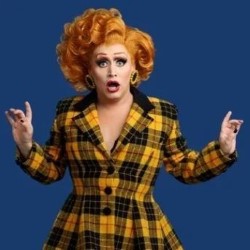
Remarkably after a nearly 20 year career in the cutthroat world of Drag, Scotland’s own queen of the heels Mary Mac makes her debut at the Edinburgh Fringe (although she has headlined Edinburgh Pride in her time too) in an hour long  excellent explosion of drag musical campery that see’s the drag legend and west end star win over audiences with a fine selection of songs and comedy from a truly polished performer in killer heels.

What sets Mary apart from many a drag queen working the fringe is number one, that Ru Paul doesn’t know her name and two she is a genuinely talented performer with credits such as “Everybody’s talking about Jamie” and “La Cage Aux Folles” along side establishing a career on the cruise ships which includes a close friendship with gay icon Jane McDonald.

Mary’s vocals are peerless and she delivers the songs with the power of Shirley Bassey and her impersonation of Cher is sheer comedy gold. The comedy flowed with ease and refreshingly it was comedy that was observational and genuinely funny. Yes, like all drag queens the comedy got a little near the knuckle but never at anyone’s expense and every joke and quip landed on solid ground from an expert who knows how to read her audiences.

Mary has a true gift of harnessing the old world of drag ala Danny La Rue but also transcending it to make it accessible to modern audiences. She has a genuine warmth and spirit of character that draws you to her and you hang on every word of her career anecdotes it’s a joy to spend an hour in her company and as she sings herself “This is my life!” and she truly means it!

You won’t find a better drag turn elsewhere on the festival, this show has it all, the voice, the songs, the comedy and a true global icon of drag! Miss Mary Mac and long may she reign!

Mary Mac – Hail Mary: The Tartan Songstress, Studio 2 at Assembly George Square Studios, Venue 17, Runs Until 30th August for more information go to: Mary Mac – Hail Mary: The Tartan Songstress | Edinburgh Festival Fringe

Mary Woodward at the Festivals

Dragon, The Fringe, Review

*** (3 Stars)

“Wonderfully expressive”

The Fringe programme lists the Yehyo Dance Company (UK/China/ Taiwan) as the group performing Dragon: I’ve tried but failed to find any more information about them, which is a pity, as I’d like to know more.

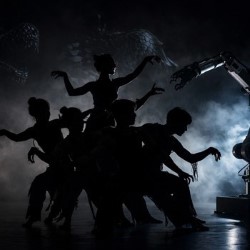
Six performers, five female, one male, are joined on stage by an extraordinary device.  From a large white box on castors protrudes a construction which is multi-jointed and very flexible – as if an elephant’s trunk had been made from a variety of sections of metallic tubes, culminating in a thin nozzle-like structure which looks as though it has an eye or some other sort of aperture at its upper end.  At first this box stands at the side of the performing area, but later it is moved into and becomes a part of the action in continually changing and inventive ways.  The ‘trunk’ moves and flexes as if it’s a living Creature, silently and gracefully moving through the air that surrounds it.

The six performers are exceptionally talented dancers, acrobats and gymnasts.  Their hands and feet are extraordinarily flexible and expressive, their movements a mixture of contemporary dance, tai chi, acrobatics and freestyle gymnastics.  They dance singly, in pairs, in groups, and all together – with an impressive and at times frightening synchronicity.  Their movements are fluid, graceful, and strong, at times resembling water, growing plants or moving animals: at others they become almost robotic, mechanical, angular.  They move in three dimensions – not simply across the floor, but down on to the floor and up into the air, almost but not quite flying.

They move into and out of the light and through the smoke that billows from the wings.  Behind them is a shifting kaleidoscope of images; the sounds they move to have equally near-infinite variety.  They are both extremely technically accomplished and wonderfully expressive.   Their costumes are a wonderful assemblage of black, white and silver fabrics: their faces sparkle with glittering makeup.  The whole effect is most impressive, and the final scene where a pyramid of performers stretched up from the floor to make face-to-face contact with The Creature.

All this said, they were also afflicted with technical problems.  At times the box-creature didn’t want to play and had to have attention from a black-clad stagehand, resulting in some lengthy pauses.  The backdrop of black curtains was not stretched tight, so the projected images got lost in the folds of the fabric.  Most frustratingly, when a colourful series of pictures accompanied a narrative in [I think] Chinese, it was almost impossible to read the English subtitles which would have made the whole show make more sense. 

These things apart, it was an excellent show which the audience greatly appreciated. 

Dragon, The Fringe, C Arts Aurora, Venue 6, Run Ended, For more information go to: Dragon | Edinburgh Festival Fringe

Mary Woodward at the Festivals

Angels in America, Edinburgh International Festival, Review

**** (4 stars)

“Absolutely First Class!”

A standing ovation greeted the cast at the end of this eagerly anticipated production from Internationaal Theater Amsterdam.  I really wanted to be as enthusiastic but simply couldn’t.

Make no mistake, the acting was absolutely first-class: huge credit to Marieke Heebink, Hans Kesting, Minne Koole, Jesse Mensah, Eefje Paddenburg, Felix Schellekens, Krisjan Schellingerhout and Eelco Smits for creating memorable characters and believable situations, even ones taking place in another reality [possibly under the influence of medication and/or other substances].

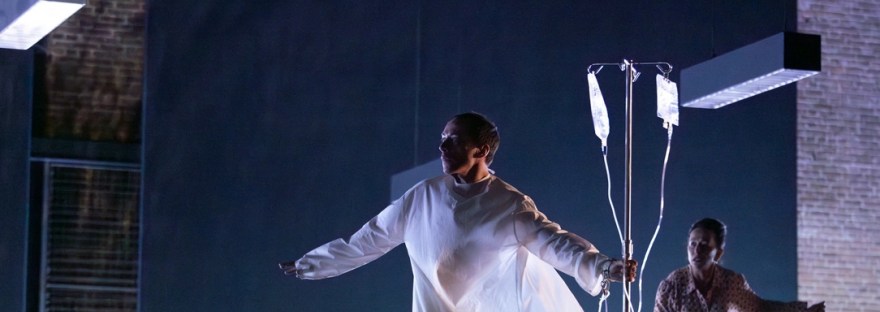
Angels in America centres on four characters during the Reagan presidency.  

Long before The Book of Mormon, two Mormons – Joe and Harper – take centre stage.  Joe is a lawyer in New York city who’s trying to rise up the ranks: he’s taken under big-shot lawyer Roy Cohn’s wing, and is being urged to move to Washington in order to further his career.  He’s reluctant to do so because of his wife, Harper, with whom he exchanges ‘buddy kisses’.  She’s obviously not happy, both in herself and in their relationship, and is dead set against the move.  Joe keeps going out ‘for long walks in the park’ – one of the first intimations that he’s possibly not being the good heterosexual happily married Mormon boy he appears to be…

Prior and Louis are lovers.  Prior is an ex-drag queen: Lous is a Jewish boy who has an enormous chip on his shoulder about just about everything.  Prior has been diagnosed with AIDS and is convinced he is going to die.  Louis, rather than supporting him, is angry with him – even blames him – and simply cannot cope with the imminent prospect of a messily sick and dying partner.  Prior’s bestie Belize, another ex-drag queen who now works in one of the big hospitals, is a constant source of support for Prior and antagonism towards Louis.

We meet Roy Cohn at his doctor’s – he’s been sick for a while but is telling everyone it’s liver cancer.  His doctor is very blunt – it’s not.  Cohn is a high-ranking lawyer whose main preoccupation, it becomes very clear, is not, as one might expect, the pursuit of justice: rather it’s the pursuit of power by any and every means available.  He’s very comfortable with the fact that it was through his behind-the-scenes actions that Ethel Rosenberg was sent to the electric chair as a communist and a traitor despite strong evidence to the contrary. 

Cohn’s energies are now concentrated on maintaining his hold on power while concealing his illness – Americans have no use for the sick.  He finagles his way onto the experimental ward treating AIDS patients, sets up his own supply of the experimental drug AZT, and is brought into contact with Belize, who works there.  Louis and Joe meet each other and embark on a physical relationship: Prior and Harper meet in some other reality, sharing a relationship of the mind.  Ethel Rosenberg starts appearing in Cohn’s life, watching with interest the progress of an inquiry into his past dealings which may well result in his debarring as a lawyer.  A shining angel appears – is it from heaven, or from hell?  Does it come to accompany Prior to paradise, or to add to the physical and mental torments he’s already suffering?

What emerges from this drama is a picture of an America which bears little or no relation to the ‘American dream’ but has many striking parallels with today’s USA.  Greed, substance misuse, the pursuit of power, the discarding or overlooking of the poor and weak, the worship of ‘success’, whatever that is… the list is endless and deeply depressing.  It also shines a harsh light on the struggles of gay people to access proper medical care, and the lengths to which ordinary human beings would go to try to help.

It’s a very moving piece, especially for people who remember those times and the huge numbers of friends who died after immense suffering and often neglect.  The men are very believable: I wish the women had received equal treatment. – but mostly they The female rabbi who opens the show, Joe’s mother, even Esther Rosenberg, are pretty two-dimensional.  The doctor, while played by a woman, could equally well have been played by a man.  Even Harper, who is a central figure, is portrayed as mentally unstable and unable to stand on her own two feet – though it becomes increasingly clear that this stems from her addiction to Valium.  The central male characters are much more real, whole and rounded figures, even if none of them are particularly loveable.

The acting, as I’ve said, is superb, but the characters [with the exception of Prior’s bestie, Belize, who is a sweetie] failed fully to engage me.  Part of the problem is, I’m sure, that the actors were speaking Dutch.  Angels in America, even in this shortened version, is a very wordy play, full of important ideas, and the supertitles were essential to enable a grasp of them.  Alas, this meant that at least half my attention was on them rather than on the stage, so I missed some of the action and couldn’t focus fully on the emotions swirling around.  Had the dialogue been in English, I would have been able to engage more deeply… 

Even so, it was a superb performance by all concerned, rightly saluted with a standing ovation.

Angels in America, Edinburgh International Festival, King’s Theatre, Run Ended for more information go to: Angels in America | Edinburgh International Festival