***** (5 Stars)
“A Timeless Scottish Comedy Classic!”
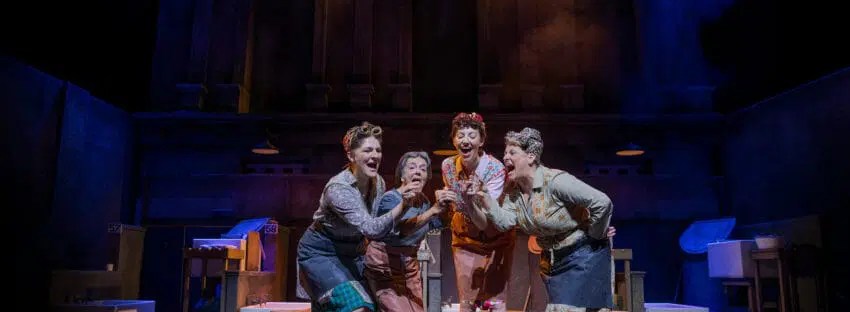
Legendary Scottish actor, comedian, playwright and writer Tony Roper recently celebrated his 85th Birthday to mark the occasion he announced he would direct his greatest work one last time to mark its impending 40th anniversary and his retirement from directing the show. The show is of course the cherished theatrical treasure “The Steamie” featuring songs by David Anderson and new production comes to Edinburgh’s Kings theatre as part of the inaugural season since reopening with a programme that celebrates the best of Scotland’s theatrical arts and proves once again that The Steamie is nothing less than a timeless Scottish comedy classic.
Originally staged by “Wildcat” at the Crawfurd Theatre, Glasgow in 1987 it was an instant success that would a see a television adaptation screened on Hogmanay 1988 featuring Scottish acting royalty Dorothy Paul, Eileen McCallum, Katy Murphy, Sheila Donald and Peter Mullan the play featuring songs and music takes the audience on a nostalgic journey back to the Glasgow wash houses (The Steamie) of the 1950’s were women were women and friendships are cemented in a show which has a beautiful heart and some of the most joyous observational humour ever written. Who knew “Could I have another tattie” would become so famous!
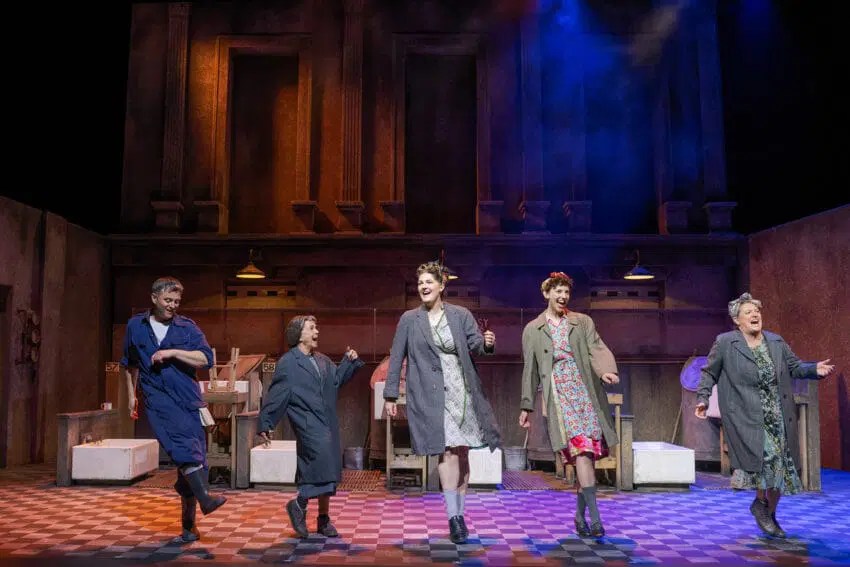
Over the last four decades numerous productions have been staged including an over-the-top mega show at the Glasgow SSE Hydro and even a production featuring a cast of drag performers. Now the 2026 production comes to the King’s Edinburgh for a weeklong run and delivers a flawless joy de Vere performance that makes the show sparkle just as brilliantly as the original.
A stellar cast of Lousie McCarthy “Dolly”, Alice Cleland “Margrit” Eden Barrie “Doreen”, Lesley Mackie “Mrs Culfeathers” and Paul J Corrigan as “Andy” combine together to deliver a comedy acting masterclass that’s rich in laughter as well as nostalgia and not a swear word is uttered between them thanks to Ropers incredible writing, he knows it works and that influences his beguiling direction which allows his cast to both embody and embrace the characters.
The entire cast deliver beautifully, and each get a moment in the spotlight that touches the heart whether it’s a monologue or song its clear this cast are revelling in the show. The cast are backed by a flawless production team.
Kenny Miller’s Set and Costume Design allows ’1950s’ Glasgow to come vividly to life and brings out the true heart of the piece that lets the audience see through the rose-tinted veneer of nostalgia to the reality of 1950’s life as opposed to today when the washing Is turning on a machine in our kitchens. Emma Jones Lighting design is nothing short of stellar ably supporting every emotion across the show. Paul Smith for apex acoustics sound design is equally excellent with pitch perfect balance between performers and Musical director Ross Brown’s musicians.
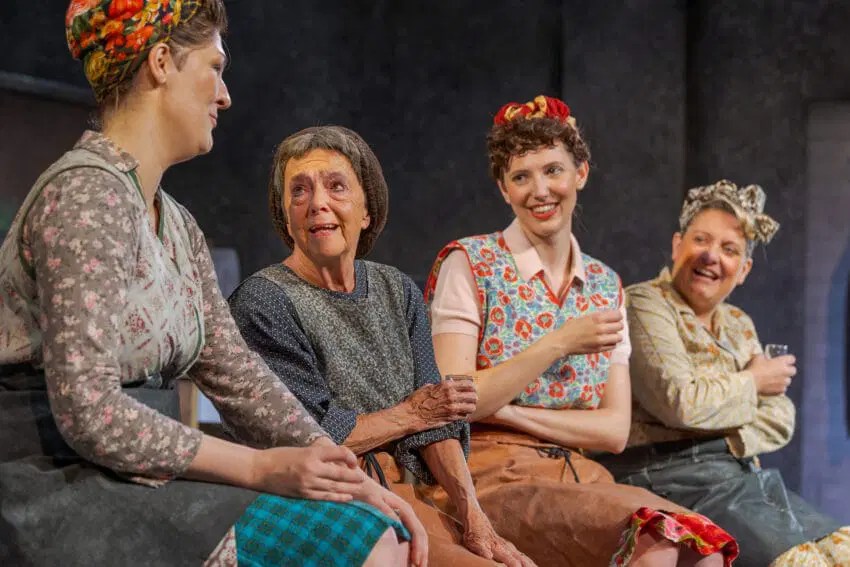
The Steamie remains timely as it is timeless! And this new production ensures everything that’s beloved and treasured about the play is right there on stage, funny, warm and full of heart it’s a show which will continue to enchant audiences for the next 40 years and behind and for that we are all truly grateful to the genius of Tony Roper!
As the song goes “It wont be long before the bells, time just over takes you” don’t let it over take you and grab what few tickets remain for a show which will lift your spirit and your heart in equal measure and you will leave the King’s smiling from ear to ear! Nothing comes close to bettering it! Wonderful stuff indeed.
The Steamie, The King’s Theatre, Edinburgh until Saturday 10th October 2026. For more information and tickets go to: The Steamie – Capital Theatres
The 2026 Tour continues, with the production visiting Pitlochry Festival Theatre 20th -24th October, Dunfermline Alhambra Theatre 29th – 31st October before culminating at the King’s Theatre Glasgow 2nd to 14th November for more information go to: https://rerrterr.com/