Brett Herriot at the Festivals

Girlz, The Fringe, Review

*** (3 stars)

“A Musical with real Potential”

Daf Hughes written “Girlz” debuted at the 2025 Fringe Festival having been developed via workshops in 2023 and 2024 and now an updated but still abridged version of the show comes to the 2026 Festival playing at the Gilded Balloon Doonstairs on Chambers Street.

It’s only fair to say that on the day of review there were major technical issues with the house opening nearly 15 minutes late followed by two show stops, which meant the show finally went up with a 30-minute delay. That being said, the stellar cast and production team proved that no matter what the show must go on and my word did they triumph.

Girlz tells the story of a 5-piece girl band (think Spice Girls crossed with All Saints) put together by a Simon Cowell knock off Dan Cashman but there is a cost to be paid for the price of Fame facing up to addiction and relationships tested to the limits and rather refreshingly this musical looks at the human side more than the glitter of fame. Performances are excellent across the board with Meggie Hughes leading the company in style as “Nicky” as really her journey the story revolves around.

While the storyline may have a moment or two of predictability at its heart there is human and beautiful story at play. The abridgment of the show means that the story does feel rushed, however it’s a musical with real Potential and does leave you wanting to see the full 100-minute version of the show.

Girlz provides an entertaining 65 minutes of musical fun with great direction from Katy Weir and sharp Chorography from Simone Mistry-Palmer lets hope the technical issues are smooth out as the show beds into its run and may the Girlz pack the audiences in Doonstairs at the Patterhouse!

Girlz, The Fringe, Doonstairs at Gilded Balloon Patter House Runs Until 30th August for more information go to: GIRLZ | Edinburgh Festival Fringe

Brett Herriot at the Festivals

Behind Closed Doors, The Fringe, Review

**** (4 stars)

“Gripping, taught and emotionally powerful”

One of the most common vernaculars we use after a tragedy occurs is do we ever truly know what’s going on behind closed doors? We all try to be good family members and neighbours, but would we intervene in someone else’s life when its needed most? Could we make difference in someone else’s journey if for a moment we can step up when it really counts? That’s the questions that’s asked of us as an audience by Corey Muizelaar autobiographical play Behind Closed Doors currently running at the Hill Street venue for this year festival.

Muizelaar not only writes but performs the piece in the role of Jude opposite Ben Robert Cunningham as Charlie in a play that’s gripping, taught and emotionally powerful in equal measure. Both Cunningham and Muizelaar turn in truth laden performances that are soaked in conviction, truth and compassion in equal measure.

Performing in an afternoon slot, this play tackles adult issues of addiction and abuse with a sense of truth and a reality that can’t be ignored equally there is deep sense of compassion that shines through both the writing, performances and Jason Marc-Williams taught and flowing direction.

The play features a 16 strong play list of songs that have shaped Judes life and often these provided the cover for the scene transitions with a couple of them being a little clunky and over long.

Behind closed doors shines a light into an often-overlooked subject of same sex relationship abuse but does so with conviction and compassion at its heart. With stellar performances from two gifted actors and writing that truly wears its heart on it sleeves that make this play of one the “Must- See’s” of this year’s festival.

Behind Closed Doors, Alba Theatre at Braw Venues, Venue 41 Runs Until 30th August for more information go to: Behind Closed Doors | Edinburgh Festival Fringe

Brett Herriot at the Festivals

Buggers, The Fringe, Review

**** (4 stars)

Ultimately Shattering!

One of the greatest artists of the 20th century Francis Bacon was many things to many people but his well-documented relationship with petty criminal George Dyer continues to fascinate more than 55 years since Dyer’s death in 1971.

Buggers, written by Alistair Hall (Who performs as Francis Bacon), directed by Alice Wordsworth and featuring Peter Clements as Gorge Dyer is an hour long exploration of a relationship that imbued passion, sadomasochism alongside struggles with alcohol, drugs and mental health in a play that merges physical movement and taunt dialog to deliver a production that is Ultimately Shattering.

Performed in the intimate space of the “Upstairs” at the Pleasance Courtyard in an early lunch time slot, this makes for a heavy-going watch, but also a blisteringly satisfying one too. Both Hall and Clements turn in career defying performance with exquisite skill and grace. There is total believability in both characters.

Although the space is intimate it adds a deep sense of impending doom to the overall piece although nothing is left off guard or unsaid and yes there are scenes of sexual and violent nature, but this can’t be hidden away from.

Alice Wandsworth direction is rich and flowing and never holds back in delivering the truth, but it’s a truth without judgement or precondition and that allows this talented duo to capture the audience with ease and ensures they remain wrapped for the entire performance.

While there were some niggles with sound and light that are intentional it does start to Jar a little but that aside this a truly capturing hour of drama that’s a worthy addition to any festival goers diary.

Buggers, Upstairs at Pleasance Courtyard Venue 33, Runs Until 30th August for more information go to: Buggers | Edinburgh Festival Fringe

Mary Woodward at the Festivals

Don Giovanni, Edinburgh International Festival, Review

***** (5 stars)

“Sheer Perfection”

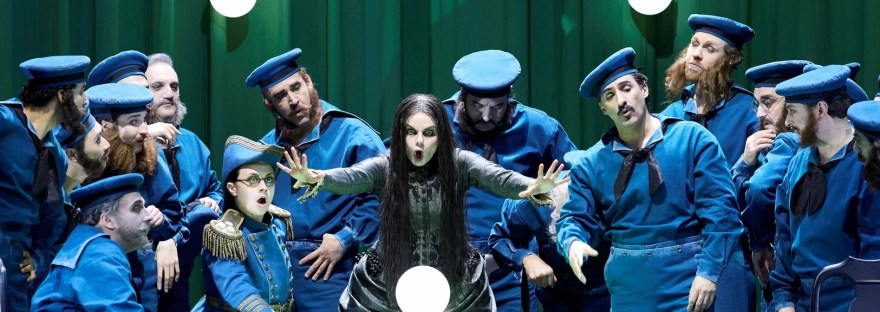
Sheer bliss!  Utter perfection!  Don Giovanni may have been dragged down to hell, but the Usher Hall audience were transported to heaven last night by eight matchless soloists and the Scottish Chamber Orchestra under their charismatic conductor, Maxim Emelyanychev.

Don Giovanni is a compulsive womaniser.  His servant, Leporello, assists him with his amorous intrigues and keeps an exhaustive record of every single one.  It’s not just in Spain that the Don chases anything in petticoats, oh no: but the list for Spain is already up to 1,003.  Yes, you heard me: one thousand and three…

The Don isn’t fussy, either – old, young, thin, fat, beautiful, ugly, high class, low class: he wants them all.  His latest conquest – or at least, attempted conquest – is the noble Donna Anna, whom we hear shrieking for help.  The Don escapes from her bedroom but encounters her father, the Commendatore: the Don simply runs him through with his sword and leaves him to die.

Don Ottavio, Anna’s fiancé, tries to comfort her: she swears vengeance, and the two set off to try to find the masked intruder.  They meet Donna Elvira, also hot on someone’s trail – Don Giovanni, who seduced her with promises of marriage but is now nowhere to be seen.

The Don’s next target is Zerlina, a village maiden about to marry Masetto: the whole wedding party is invited to a massive do at Giovanni’s place.  Ottavio, Anna, and Elvira arrive – they’re wearing masks, so of course they must be invited in.  They have realised that Giovanni is the villain they are all seeking:  they foil the attempted seduction of Zerlina, but don’t manage to capture Giovanni – instead, they find Leporello, who once more takes the punishment intended for his master.

Giovanni finds himself in the cemetery, beside a statue to the late Commendatore.  The statue warns him of a terrible fate: the Don shrugs and invites him to dinner that evening.  He’s at supper, gorging himself while Leporello starves beside him:  Elvira enters and tries unsuccessfully to convince him to mend his ways.  There’s a knocking at the door.  It’s the statue of the Commendatore, who’s come to dine with Giovanni.  He can no longer eat earthly food but invites Giovanni to dine with him.  Giovanni can’t resist a challenge: he takes the Commendatore’s hand and freezes.  Offered the opportunity to repent, the Don defiantly refuses and is dragged to hell.  This is how it ends for all villains, sing the remaining cast members…

Every August I look forward to the SCO’s Mozart in concert performance, and every year they fulfil all my expectations.  Firstly, there’s the simple joy of watching their conductor, Maxim Emelyanychev, bounce about the stage like a live wire, living every note of the music and every nuance of the drama taking place around him.  The orchestra are equally engaged and engaging.  It’s a delight to be able to see them, for once not buried in a pit below the stage – and their playing reflects the satisfaction they must feel at being an equal part of the action rather than its subterranean supporters.  The almost total lack of staging, props, and costumes means that one can focus on the music, while Maxim’s conducting guides one to that part of the orchestra we particularly need to hear.  [His continuo playing is a further subtle delight!]

And then there are the soloists.  All but one of them was new to me, and all were perfectly cast. 

Brindley Sherratt was indisposed, so the role of the Commendatore was taken at short notice by Clive Bayley, whom I well remember from my previous life in England, when I could regularly attend performances by English National Opera and Opera North.  It didn’t take him long to die, in one of the most tender moments of the opera, but his subsequent appearances as a statue were mesmerising.  In the graveyard he boomed out a warning: at the final scene his power and magnetism were spine-chilling in their intensity.

The other soloists were equally superbly cast, each one outstanding in their solo moments, and interacting with each other in subtle ways with gestures, facial expressions and body language that revealed so much about their characters and relationships with each other.

Louise Alder as Donna Anna: what a glorious outpouring of sound, what perfect delivery of two of the most difficult arias – emotionally as well as musically – that Mozart wrote; soaring over the duets and ensembles, and particularly moving in the final duet for her and Don Ottavio.  Giovanni Sala’s Ottavio was gentle and tender with his newly-bereaved Anna but fiery and strong when expressing his determination to discover, unmask, and punish the villain who attempted to seduce his beloved.  No wimp he, and the audience was loud in their appreciation of both his challenging arias.

Janai Brugger was even more bewitching as the deeply conflicted Donna Elvira: still desperately in love with Giovanni even while raging at her betrayal, wanting to see him suffer for his sins and yet desperately afraid for him too.  Her mi tradi quel’ alma ingrata was the perfect mix of the emotions with which she struggles: and her tender heart was obvious to see in her concern for Anna, Zerlina, and even the Don’s servant, Leporello.

Hera Hyesang Park was the perfect Zerlina: her light, bright soprano and lively personality lit up the role of the simple village maiden who is sorely tempted by Giovanni’s allure, and both delightfully cross with and tender towards her intended husband, Masetto.  William Thomas was perfect as the great bear of a man, sullenly resentful of his ‘betters’, ready to explode into violent action at any moment, yet putty in the hands of his fiancée.

And then we had the complex master-and-servant relationship of Giovanni and Leporello, superbly portrayed by Konstantin Krimmel and Michael Sumuel.  They are inextricably bound to each other.  Leporello resents and admires his master in equal measure, while the Don is completely dependent on his servant’s assistance while unhesitating in asserting his dominance if he feels the latter has crossed some invisible line and is treating him too familiarly.

For much of the opera, one’s sympathy is totally with Leporello as he has to watch this libertine’s incessant pursuit of anything in a skirt, while never getting any part of the action and often receiving the punishment which was his master’s due.  His ‘catalogue’ aria, brilliantly descriptive of his master’s single-mindedness, also clearly displayed his own reactions thereto.

For much of the opera, one’s sympathies are most definitely not with Giovanni – and yet for a few brief moments he held us spellbound with the most meltingly tender and enticing deh, vieni alla finestra I think I’ve ever heard – it felt as though the entire Usher Hall audience was ready to fall at his feet…. [a special shoutout for the mandolin player, too: unfortunately, there wasn’t room for the programme to give his name.]

The final sextets were a gentle way to return us to reality after the horror of Giovanni’s fate.  Righteous satisfaction that justice prevailed turned into a consideration of ‘what now?’  Zerlina and Masetto were going to be happy together; Ottavio was asked to wait a year before being able to marry Anna – tough, but he agreed, and the pair sang movingly of the strength of their love; Elvira shrugged her shoulders and said her only possible future was in a convent – but she still had time to comfort Leporello, who simply said he wanted to eat well and find a better master…

Silence: then the positive storm of applause.

If only I were allowed six stars: this Don Giovanni deserves all those and more!

Mozart, Don Giovanni, Edinburgh International Festival, Usher Hall Edinburgh, Run Ended.

Mary Woodward at the Festivals

Goodbye Dandelion, The Fringe, Review

**** (4 stars)       

“Weaves there Magic Well!”

How rare is it that an audience is, in its entirety, joining the cast in singing a gentle melody almost the instant the show has begun?  What show begins with a gentle song People die all the time…?

Maddie and Marcus Rice weave their magic around us from the very first moments of Goodbye Dandelion… It’s mostly a story, a story about life, death, and friendship, Maddie tells us: but it rings so true it doesn’t feel like a story at all.  Interestingly, it’s my second Fringe show this season that centres around assisted death.  Like the first [After Party at the Traverse] it focuses first on the very human reactions of people when they learn someone wants to be assisted to die, rather than the reasons why someone might wish to be helped to end their life.

People die all the time – yes, but life expectancy has increased over the centuries, and with improvements in healthcare, death is seen more as a disaster than a consummation devoutly to be wished…. Maddie has, after a shaky start, become friends with the amazing 87-year-old Darcy – full of life, vigour, and a very earthy sense of humour.  We learn a fair amount about Darcy and her eventful life: we also learn about Maddie and her attempts to make something more positive of her own, which is okay but nothing outstandingly wonderful or satisfying.  Maddy is shocked when Darcy, having sworn her to silence, reveals that she is planning to end her life…

People die all the time…so why is it so hard to accept that someone might have had enough of life, even when, to an outsider, they still have so much going for them?  Are people afraid to die because they have never really lived?  Is it really being a good friend to try to keep someone alive when they are ready and willing to die?

Marcus has been continually reminding us that people die all the time – even at one point singing us a list of well-known names of dead people from history to the present day.  We learn a lot of facts about dandelions and why Darcy is so fond of them; we learn to sing her favourite song and become attached to her cat, Major Minor.  We encounter the Evil Nieces.  We hear, very subtly, the beginning of Darcy’s statement that she is of sound mind and wishes to end her life.  We learn of Marcus’s past health problems and delight in his and Maddy’s wonderfully irreverent but deeply caring sibling relationship [would that I had had such a one…]

People die all the time might lead you to imagine that Goodbye Dandelion is a morbidly woeful show – nothing could be further from the truth!  It’s crackling with life, full of vigour, and crammed with laughter.  Yes, there are some tears, and rightly so – tears for someone who has loved much, is eminently loveable, and is no longer with us on earth: but who has not been afraid to live life to the full, and so is not afraid to die.  There’s also deep affection for Maddie and Marcus, who’ve been brave enough to share the challenges of their own lives with us. 

Small wonder there was a standing ovation at the end of the show!  The house was packed: this is obviously going to be one of the total sell-out shows this Fringe, so hurry and get your tickets before they’re all gone…

Goodbye Dandelion, The Fringe, Underbelly, Cowgate (Belly Dancer) Venue 61, Runs until 30th August for more information go to: Goodbye Dandelion | Edinburgh Festival Fringe