Blog

Brett Herriot at the Festivals

The Lady Boys of Bangkok – Glow Up Tour, Sabai Pavilion, Venue 189, Review:

**** (4 stars)

Eternally popular

Over quarter of a century ago Gandey productions brought a collection of Lady Boys to Edinburgh for the first time, to showcase a cabaret spectacular. For twenty five years the lady’s have gone from strength to strength and have become for so many an annual summer tradition.

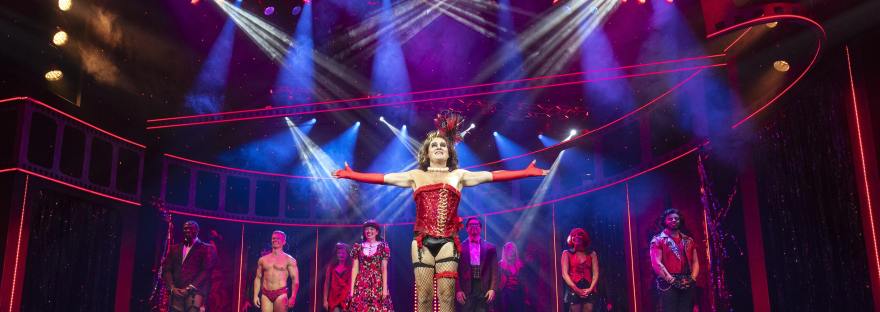
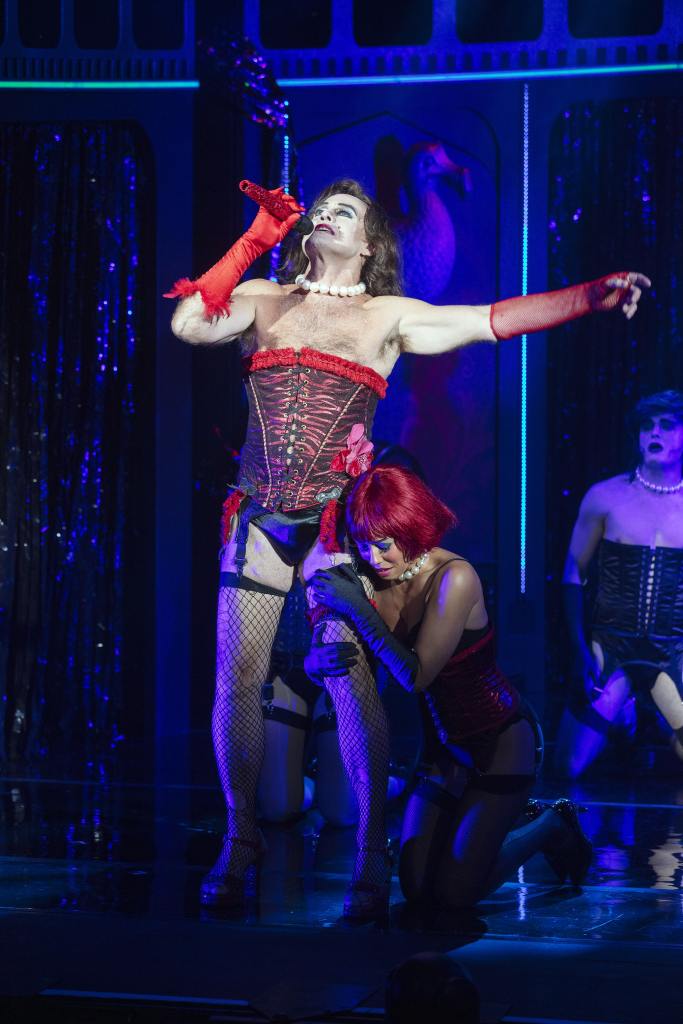
Their Sabai Pavilion has once again pitched up outside the Sheraton Grand Hotel on Lothian Road and despite being affected by the recent storm the Boys are back in action and deliver a show filled with classic hits that rely totally on its original format of the Lady Boys accompanied by its resident drag queen as the blast through tributes from the Rocky Horror show, 80s and 90s pop hits and of course Tina Turner and the cherry on the cake is of course the annual finale in a loving homage to all things Scotland.

The Lady Boys remain eternally popular and draw huge crowds especially those on Stag and Hen nights alongside those starting out there night out the town with this glamourous and glitter packed cabaret so expect lots of noise from both the Boys and the audience alike!

There were issues with the sound on the evening of review its simply not loud enough, perhaps that’s due to the Pavilion location outside a hotel but given how loud the audience were through out the show the sound from the stage needs to match that.

There will always be questions over the ethics of what we are watching but the Lady Boys perform with clear talent and enthusiasm for what they do, and the Fringe wouldn’t feel the same without them and given how they are packing them into the Pavilion shows how beloved they are. A true corner stone of the festival.

The Lady Boys of Bangkok – Glow Up Tour, Sabai Pavilion, Venue 189 for info go to: https://www.edfringe.com/tickets/whats-on/the-lady-boys-of-bangkok-glow-up-tour

Mary Woodward at the Festivals

EIF, Mozart La Clemenza di Tito, Usher Hall, Edinburgh, Review

***** (5 stars)

“Utterly brilliant”

Utterly brilliant and immensely satisfying, with gorgeous music and glorious singing.

Full-scale operatic productions cost ridiculous amounts of money.  It is therefore a joy that the Scottish Chamber Orchestra [SCO] under their conductor Maximilian Emelyanychev are continuing their tradition of bringing a ‘concert’ performance of a Mozart opera to the International Festival. 

At first sight, Clemenza is a full-scale, grandly public opera, with choruses of praise for the `emperor, but it’s really very intimate and focused on intently personal situations.  Love, friendship, loyalty and integrity are all challenged: and not everyone comes through the tests with flying colours.

Like many 18th century opere serie [‘serious operas’], the plot of Mozart’s La Clemenza di Tito is a tad convoluted.  Roman Emperor Titus, the merciful hero of the title, has recently parted company with the foreign princess Berenice.  Roman noblewoman Vitellia hopes to replace her at the emperor’s side.  When Tito asks Servilia to be his consort, Vitellia works on her besotted admirer, Sesto [who is Titus’s dear friend and Servilia’s brother] to lead a rebellion against his bestie.

Servilia is in love with Annio, who despairs when he learns of Tito’s proposal.  Not so Servilia, who faces up to the emperor and says her heart is already taken.  Noble Tito gladly gives his blessing to the two young lovers, and turns his attention to Vitellia, who tries to stop Sesto – she no longer wants Tito to die.  Sesto’s attempted coup fails and, as he refuses to incriminate the woman he loves, he is condemned to death by a heartbroken emperor.  Vitellia is at first lost in dreams of imperial glory but, full of remorse, has the decency to confess her part in the plot.

Noble Tito refuses to condemn anyone to death and pardons them all.  Cue general rejoicing and praise of his nobility and mercy.

All six singers were new to me, and all have superb voices: I look forward to hearing them again very soon.

Giovanni Sala, slim and elegant as the emperor Tito, had a voice that was soft and gentle as he pleaded with his friend Sesto to explain what had prompted him to attempt his murder, but whose rich, ringing tones gave his imperial pronouncements majesty and power.  Angela Brower’s Sesto was putty in the hands of the woman he loved, but riven with anguish at the thought of betraying his dearest friend and able to face his imminent death courageously.  I couldn’t help but wonder whether he and Vitellia had any future together after she confessed to masterminding the plot. 

Tara Erraught’s Vitellia was very sure of her power over Sesto.  Thirsting for vengeance – her father was the previous emperor – she had no qualms about manipulating her lover into an act of treason.  It was only later, when she realised that Sesto wasn’t going to betray her, that her conscience started to prick her.

Hera Hyesang Park was a gentle, loving Servilia, whose inner core of steel enabled her to confess her love for Annio to Tito – saying that she would still marry him, but he must know her heart was given to another.  Maria Warenberg’s Annio was superb: an ardent lover, a devoted friend to Sesto, and a loyal supporter of his emperor.  Peter Kalman didn’t have a huge amount to do, but with his magnificent voice played the elder statesman to perfection.

The SCO, led by Stephanie Gonley, were brilliant and obviously loved what they were doing.  Maximilian Emelyanychev had a ball at the harpsichord, bouncing about as he directed soloists, chorus and instrumentalists.  Hugely appreciative applause was deservedly given to the two clarinettists – Maximiliano Martin on basset clarinet and William Stafford on basset horn.  Two of the greatest arias in the opera engage the singer in a duet with one of these instruments whose melodies are an integral part of the aria.  In Sesto’s deh, per questo istante solo and Vitellia’s non piu di fiore, the instrument adds yet more expressive emotion to the singer’s words.  The SCO chorus, directed by Gregory Batsleer, made the most of their relatively short but impressive contributions and were deservedly applauded by the principals at the final ‘curtain’.

In short, it was an absolutely wonderful evening.  I’m already looking forward to next year’s SCO Mozart!

EIF, Mozart La Clemenza di Tito, Usher Hall, Edinburgh, for more information go to: https://www.eif.co.uk/events/mozarts-la-clemenza-di-tito

Mary Woodward at the Festivals

Does anyone else smell curry?  Theatre 3The Space @ Surgeons Hall (Venue 53) Review

**** (4 stars)

“Beautiful”

Kiren Virdee is getting ready for her performance as we enter – sparkly tunic and trousers, long scarf: she looks beautiful, but has to keep checking every single detail of her appearance.

Finally she’s ready to face us – but still seems to find it hard to find the words.  What does she want to say?

Does anyone else smell curry? <chuckle> repeat <chuckle> repeat <chuckle> <chuckle>.  It could be taken as an innocent comment – but is it?  Again and again, until it becomes unbearable: Kiren begins to tear at her clothes, to twist and gyrate and wrap herself into knots: finally succeeding in ripping them off, and putting on ‘western’ top and trousers…

There’s a constant soundtrack of individual remarks and comments, which slowly build up into a mosaic of voices recounting their experiences of growing up in South Asian households in Britain.  Kiren lipsynchs a lot of these – it’s both unnerving and very powerful to hear so many different voices apparently coming out of one young woman’s mouth.

I didn’t see anyone who looked like me onstage, in films or on tv.  Heroines are always white and blonde.  I never came across other gay Asians.  I didn’t see myself as a brown person.  I was five, and one of my classmates wouldn’t hold my hand – even at five, though I didn’t understand why, I knew I was different.  I’m too fat, too curvy, my face is not slim enough, I never liked my thick dark hair, my body hair was seen to make me unattractive.  All our differences were laughed at; people didn’t understand our culture.

This stream of sound goes on and on.  There are pop videos in which white people imitate Asian dance moves and gestures: stealing from the culture while not admitting the validity of the people with whom it originates.  Kiren dances, at first with a big smile on her face, but slowly the repetition of the negatives distracts her from her dancing.  Take my culture, but leave the person I want to be… 

The hurts and rejections – a tangible violence – become more and more painful, driving her to self-harm.  And all the time the frenzied whirl of efforts to conform to white standards of looks – pluck, wax, epilate, shrink: repeat: repeat: – faster and faster until she feels herself shrinking away into nothing.

More voices describe the realisation of being the only brown-skinned person in the room, or on public transport: of beginning to feel unsafe, often because of past experiences.  It’s depressing: I thought we’d solved racism years ago…

And I can’t conform to your expectations – I can’t speak Punjabi, I can’t dance the way you want me to…

What colour are we inside???

The internal conflict between the two cultures becomes increasingly exhausting.  The voices start to speak over each other, to grow louder and louder, and the tension in Kiren’s body increases – and always there is that little <chuckle>.  All those little violences don’t make you stronger: Bit by bit you’re chipped away to nothing.  Depression almost feels like self-care – have another hour in bed; you’re exhausted, have some chocolate; have the whole bar; go back to bed.  Eventually you disappear altogether.

There are many beautiful poems in this show.  The clarity of Kiren’s articulation of her feelings reminded me of the words of young poet Amanda Gordon at Joe Biden’s inauguration. 

I wish more people could come and hear this compilation of experiences of growing up feeling different, of dealing with a clash of cultures, of trying to conform to other people’s expectations…. Why is it expected that everyone coming to Britain should abandon their native culture and traditions?  Being unique in yourself can be a lonely place…

I’m glad that today’s show was a sellout, and really sorry that it was Kiren’s last one this August.  I hope Does anyone else smell curry? goes on to reach a much wider audience – sadly, in this day and age, it’s still sorely needed.

Does anyone else smell curry?  Theatre 3The Space @ Surgeons Hall (Venue 53) for more information go to https://www.edfringe.com/tickets/whats-on/does-anyone-else-smell-curry

Mary Woodward at the Festivals

A Noble Clown, Scottish Storytelling Centre (Venue 30) Review

**** (4 stars)

Very entertaining evening

What a fascinating way to end this day’s reviewing! 

Who knew that the afterlife is a queer thing in which we do not merely remember but relive disjointed fragments of our life on earth?  Duncan Macrae, presented on the Storytelling Centre’s stage by Michael Daviot, did just that, giving us a wonderfully mixed tapestry of scenes and anecdotes from Macrae’s public and private lives.

There’s a rhinoceros on stage – or at least, a man with a rhino horn… Ionescu’s Rhinocéros was written in 1959, and its first West End production starred Laurence Olivier and Duncan, who gives us a personal account of the chaotic directing style of Orson Welles and Olivier’s intervention to save the cast from disastrous and total confusion.

Born in 1905 in Glasgow, his strictly Presbyterian family nonetheless countenanced annual trips to the pantomime, which sparked Duncan’s passion for theatre.  He studied engineering at university  but wanted to be an actor – but to do this professionally would have meant having to go to London, as there wasn’t a professional theatre in Scotland.  He decided to train as a primary school teacher, and met voice coach Ann Mcallister, who had a profound influence on him. 

He enjoyed teaching for some years – it must have been fascinating to be in his classes, as he would interrupt lessons to do unconventional things that he found interesting…. At the same time he was making a name for himself as a great comic actor in amateur theatre in Scotland.  In 1947 he gave up teaching and turned professional.

Speaking to us from the afterlife meant we have a whirlwind, disjointed rollercoaster ride through the incredibly varied roles Duncan performed before his untimely death in 1967 from an undiagnosed and slow-growing brain tumour.  Comedy, tragedy, pantomime; stage, cinema, television; Shakespeare, JB Priestly, Joe Orton; his career included them all and more. 

Macrae began with a reputation for comic acting, but he was obviously a straight actor of considerable stature too, perennially dogged by an early TV performance of a juvenile party piece,  the wee cock sparra, which became an albatross round his neck.  We were given so many extracts from such a wide variety of plays that it’s hard to pick a favourite – but I think mine has to be from playwright James Bridie’s Gog and Magog.  Harry Magog’s lengthy speech and very slow death scene, a wonderfully absurd rendition of Shakespeare reworked by William McGonagall, moved us all to delighted, groan-filled laughter.

This very entertaining evening was both an extraordinarily display of talent on the part of Michael Daviot and a fitting tribute to a great Scottish actor who contributed hugely to the development of a distinctly Scottish theatre tradition.  Greatly appreciated by everyone in the theatre, it was a lovely way to end my day.

A Noble Clown, Scottish Storytelling Centre (Venue 30) for more information go to

Marry Woodward at the Festivals!

Trouble, struggle, bubble and squeak, Above at Pleasance courtyard (Venue 33) Review

*** (3 stars)

“Appealingly presented

It’s always a challenge to review the show that follows one that’s moved me deeply and/ or impressed me enormously – and that’s what I’m facing having watched Trouble, struggle, bubble and squeak immediately following my immersion in Orwell’s nightmare world of 1984.  Had I seen something less overwhelming, my reaction to Victoria Melody’s show might well have been different…

It’s a good show, and in the normal run of things I would have been greatly enthused by her account of [spoiler alert] small-scale local resistance to bureaucracy and the ultimate triumph of people power.  Add to this that one of the principal characters in the show is Gerard Winstanley, the leader of the Diggers, one of the movements in the 17th century which arose to challenge the established order, in the same way that the Quakers did, and I should have been fully engaged.  Unlike the Quakers, the Diggers didn’t survive for very long –  but at the time they radically challenged the idea that land belonged to private owners.  During the turbulent times of the English civil war  they took over common land and grew crops on it, declaring that they did this so that “all might eat and all might thrive”.

Victoria’s story begins in a village in Northumbria where she has come to join a historical re-enactment society.  Inspired by a chance internet discovery of Gerard Winstanley, she wants to become part of one of the many groups of British hobbyists with a view to later on creating a show about them.  She is somewhat taken aback to realise that she has joined a group of Royalists, but presses on regardless.  Refusing to become a Wench [traditionally the only occupation open to women], she instead becomes a musketeer, though never fires a weapon.  We are introduced to Hammer, leader of the group and passionate insister on historical accuracy,

Another strand in her story is her involvement with East Brighton, a deprived and neglected council estate on the edge of the South Downs National Park.  Here we meet a number of other characters, all in some way opposed to authority.  There’s Brian, who starts off wanting to feed a few local people and who ends up [with the help of other volunteers] feeds 400 people a day.  Dave is a naturalist whose fascination with, and knowledge of, the species to be found on chalk grasslands, results in the discovery of a new species of beetle, the White Hawk Soldier Beetle and the complete obstruction of proposed developments on the land adjoining the estate.  Lacey is almost single-handedly responsible for the growth and development of the Crew Club, a centre where local children and young people can feel safe while they get involved with any number of groups and activities.

Add to this mix a large patch of brambles beside the Crew Club which the local council refuses to allow to be made into a community garden, and you have a fascinating story of a historical re-enactment [involving some of the Northumbrian group she joined] which ends up with a [decidedly inauthentic historically] stand-off between the local community and the landowners [aka the council] with surprising results.

Since Mark Thomas directed this show, it’s not surprising that it’s a celebration of the power of ordinary people coming together to resist the powers that be and the continuation of the status quo.   It’s appealingly presented, with bright colours and clever props.  Victoria is good at engaging her audience and getting us involved in the action.  There was a lot of laughter, a lot of good humour and, I would hope, a lot of inspiration to get involved in doing what we can to change small things, support the underdog, and subvert the establishment wherever possible.

An enjoyable hour, with a heartwarming message and some very good knitted vegetables.

Trouble, struggle, bubble and squeak, Above at Pleasance courtyard (Venue 33) for more information go to https://www.edfringe.com/tickets/whats-on/trouble-struggle-bubble-and-squeak