
**** (4 stars)
“Delightful and Fascinating”
It’s hard to imagine life before Biba but, gentle reader, I was there and I remember… Life was pretty drab and grey, and young people were expected to look like smaller-sized clones of their parents. The concept of young people as beings with lives, minds and wishes of their own was hard for many people to grasp.
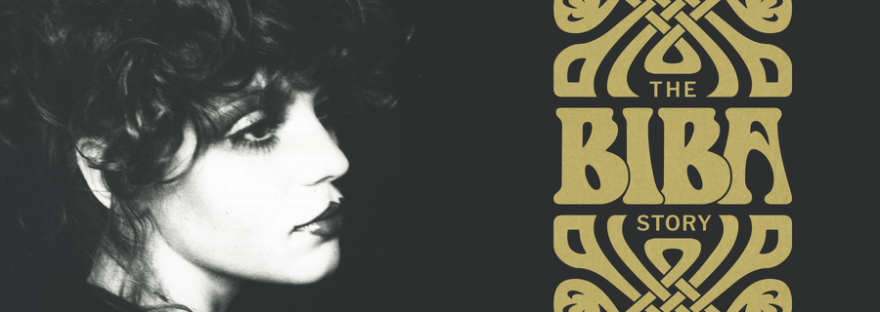
And then suddenly, there was Biba…and nothing would ever be the same again. It’s hard to believe that the Biba phenomenon lasted little more than ten years and yet had a lasting effect on the world of fashion and the development of a concept of ‘lifestyle’. For those of us old enough to remember those days, Dovecot’s exhibition offers the opportunity to wander down memory lane. For those who did not have that experience, come and marvel at the simplicity of the way in which our lives were changed forever.
Barbara Hulanicki, alongside her husband Stephen Fitz-Simon, started a small mail-order company selling inexpensive clothing for women and children in 1963 – Biba’s Postal Boutique. An advertisement in the Daily Mirror resulted in 17,000 orders for a Brigitte Bardot inspired pink gingham dress. This success prompted Barbara to give up her day job as a [very successful] fashion illustrator and concentrate solely on Biba.
In 1965 a very small shop in Kensington was transformed into a seeming night club with black walls and random pieces of old-fashioned furniture on which customers could perch while trying to find their perfect purchase. The emphasis was on affordable up-to-the-minute fashion, aimed at young people with an eye to design but with a very limited budget.
Initially, the clothes were designed for very skinny young women – Twiggy was an early customer, and the perfect size and shape for Biba designs. Only 500 of each garment would be made, so a design sold out quickly and the shop’s stock would be constantly changing. The colour palette of the clothes was also unusual – in addition to black and brown, mauve, rust, plum and purple were much in evidence. Feather boas and wide-brimmed felt hats became archetypal Biba add-ons, and were much in evidence in Swinging London in the late 60s.
Biba swiftly outgrew its first Kensington shop and in 1966 moved to a triple-fronted shop not far away. For the first time, men’s and children’s clothes could be bought, alongside many non-clothing Biba products. Three years later, Biba moved into a shop on Kensington High Street, offering a wide array of clothing, accessories, cosmetics and furnishings. In 1973, Big Biba was opened, and proclaimed ‘the most beautiful store in the world’. Formerly the Derry & Toms department store, it was transformed to provide the ultimate Biba shopping experience, with seven floors of merchandise from groceries to cosmetics and furnishings in addition to a constantly-changing array of clothing. Now one’s entire life could be lived in Biba…
Alas, this only lasted two years. in a very short space of time, Hulanicki relinquished all right to the Biba name, and moved on into another chapter of her life, not even retaining the majority of her own Biba clothing.
The garments on display in this fascinating exhibition have mainly come from private collections. Many are from the collection of Sarah Plunkett, the first manager of the first London Biba; others from Lilli Anderson, the last person to stop working at Biba when it closed in 1975; yet more are from individuals who responded to a recent appeal for Biba clothes and memorabilia, and generously allowed them to be displayed here.
It’s touching to see the small holes and imperfections in garments which have virtually been worn to death, they were loved so much. It’s also quite scary to see just how small the dresses are, how ridiculously skimpy and tight the sleeves are, and be reminded of quite how short one’s skirt was in the 60s… Alas, I would never have fitted into early Biba – even as a young woman I was tall and not at all slender – but I suspect that even when Biba garments were made in larger sizes, they would never have looked good on me… <sigh>
There are some fabulous garments on display, and not just simple frocks. Coats are much in evidence, as are suits of various sorts: and more glamorous wear, including evening wear, marketed as nightwear because that incurred a lower rate of tax… It’s interesting to see the development from simple shift dresses to more flowing garments, with wider sleeves and an increasingly ‘hippy’ vibe.
There are some extraordinary fake-fur garments [a snow leopard pants suit!] and some surprisingly vividly coloured clothes, contrasting with the generally sombre palette used. One singularly gorgeous simple cream dress had me feeling momentarily very light-fingered – but it would never have fitted, and its absence would have been instantly spotted!
The exhibition ends with personal memories of some Biba customers with photos of them wearing their favourite clothes. There’s also a place where you can write your own Biba memory and put it on the wall with all the others – and spend an age reading them all as you relive your youth…
This is a delightful and fascinating exhibition which is a window into a [goodness me!] now bygone era, when life seemed simpler and all you had to do was work out for how long you’d have to save to be able to afford the next Biba garment or item… oh happy days! Go and enjoy!
The BIBA Story: 1964-1975, Dovecot Studios, Edinburgh, Exhibition runs until Saturday 27th June for more information and tickets go to: The Biba Story: 1964–1975

 ScotsGay Arts